New Generation Universal Unified Database System
Halo Database pioneered a plugin-based kernel architecture that adapts to different application scenarios through configuration, providing full-scenario coverage capabilities.
Challenges Facing Domestic Substitution
Migration of existing system databases typically faces:
Time-consuming
Very time-consuming and requires substantial resources
Extensive Code Modifications
Need to modify large amounts of application code to adapt to the new database
Uncertain Results
Performance after migration is uncertain
High Risk
Migration carries high risk, high cost, and takes long time
With Halo Database, we help you:
Fast Migration
Migrate database objects and data from Oracle/MySQL to Halo quickly
Seamless Switch
Zero or minimal code changes to complete database switch
Smooth Upgrade
Complete database version upgrade without downtime
Cost Reduction
Significantly reduce database procurement and maintenance costs
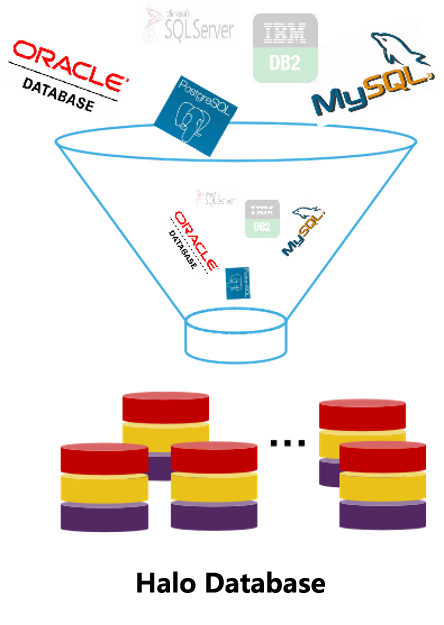
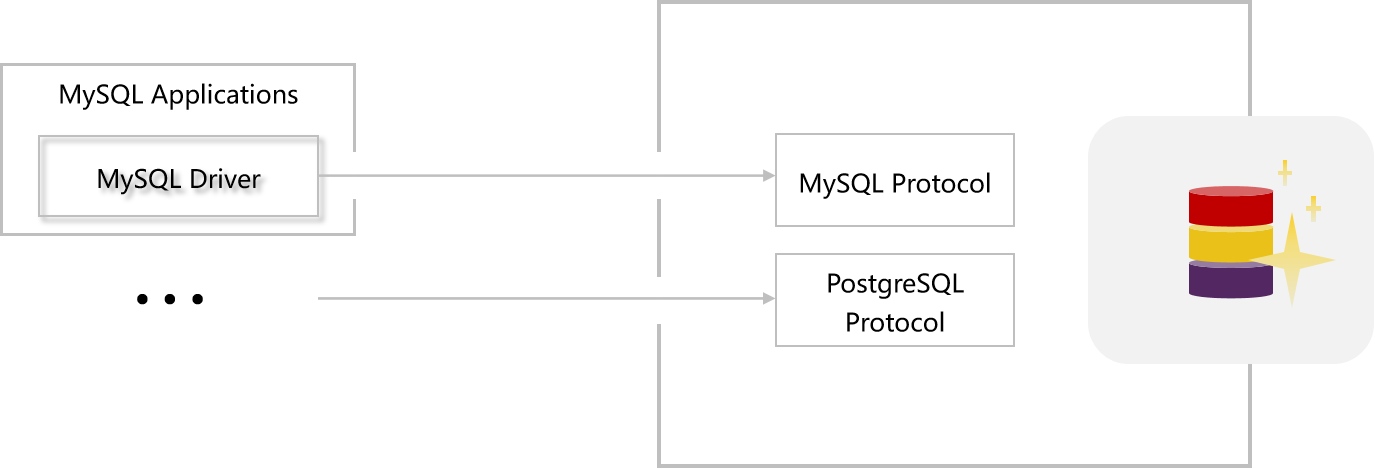
MMC (Multi-Mode Compatibility) Technology
New Generation General-Purpose Unified Database System
Native kernel-level compatibility with SQL syntax and communication protocols of multiple databases
- Native kernel-level compatibility with SQL syntax of multiple databases, with no performance loss
- Native kernel-level compatibility with communication protocols of multiple databases, such as MySQL, PostgreSQL
- Applications developed based on MySQL can communicate directly with Halo with almost no code rewriting
Advanced Kernel Architecture
New Generation General-Purpose Unified Database System
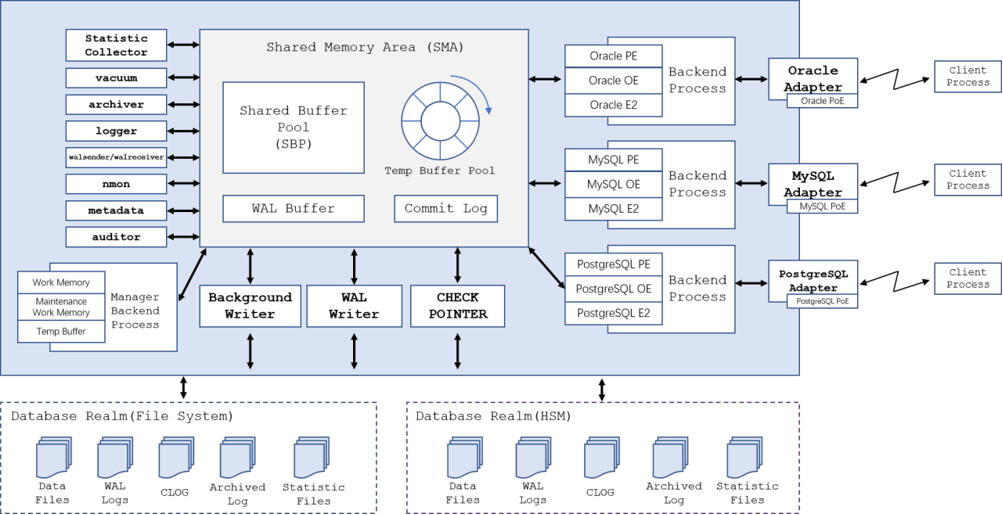
- Industry-first pluggable kernel architecture, adapting to different application scenarios through configuration, creating full-scenario coverage capability
- Kernel extensible, can be tailored to balance cost and performance based on actual needs and platform characteristics
- Supports distributed storage engine, meeting most enterprise data storage and processing needs
Product Advantages Summary
More Excellent Platform Compatibility
Theoretically can achieve compatibility with any database
Richer Deployment Architectures
Achieve master-slave, cluster, sharding architectures through configuration
Superior Performance
Comprehensive performance more than 50% higher compared to similar products
More Advanced Product Philosophy
"1+1" i.e., 1 platform + 1 core database product, creating a one-stop data processing platform
More Professional Services
We understand not only products but also business, creating end-to-end one-stop professional services
Compared with similar international products
Support more complex SQL syntax (complex association, complex aggregation, etc.), and optimize for the performance of SQL and procedural languages
Deployment / Operations / Migration Efficiency
Deployment Efficiency
Supports one-click deployment via command line
Operations Efficiency
- Provides lightweight operations platform
- Supports management, monitoring, alerting
- Comes with performance diagnostic tools
Migration Efficiency
- Self-developed migration platform
- Supports migration from multiple databases to Halo Database
- Achieves one-click migration
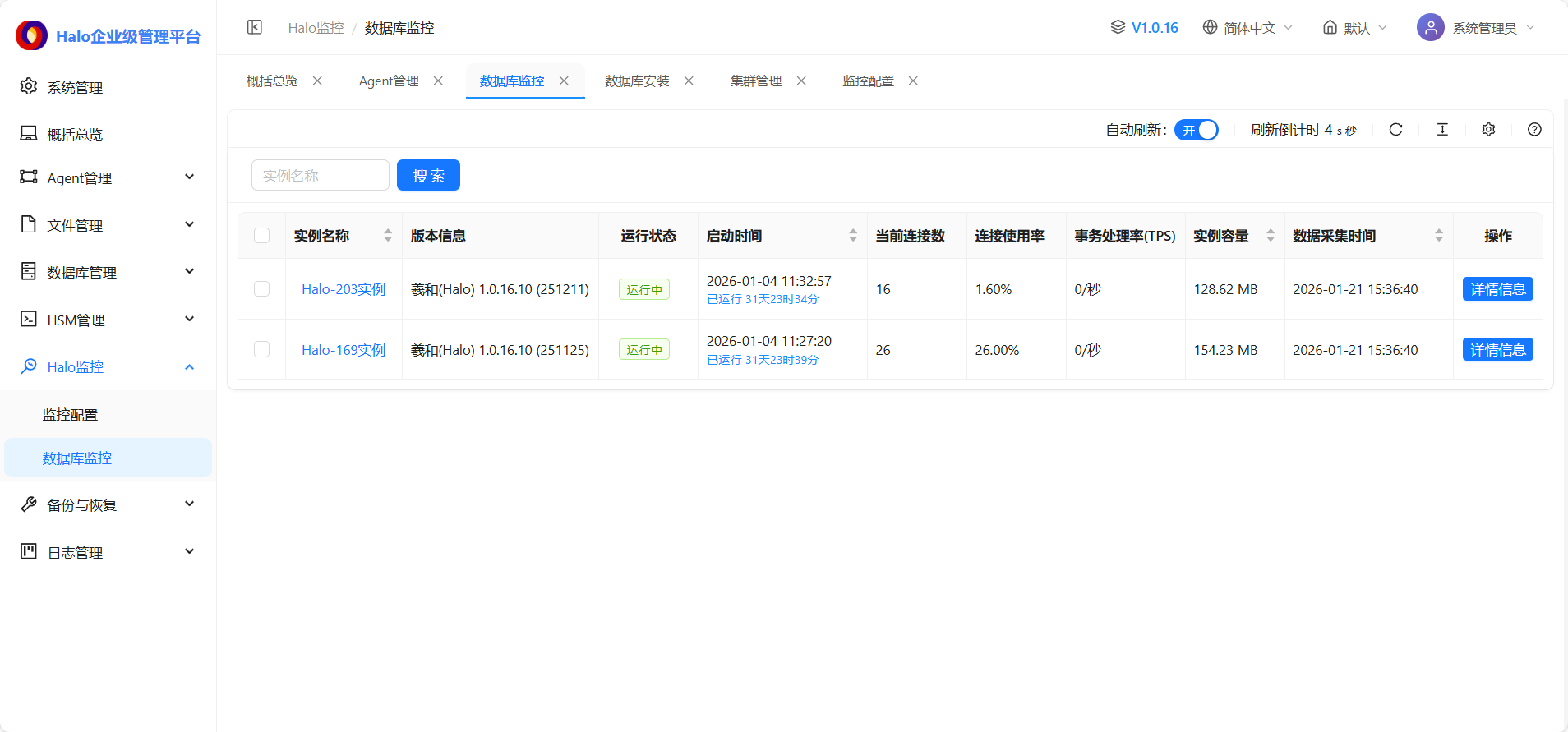
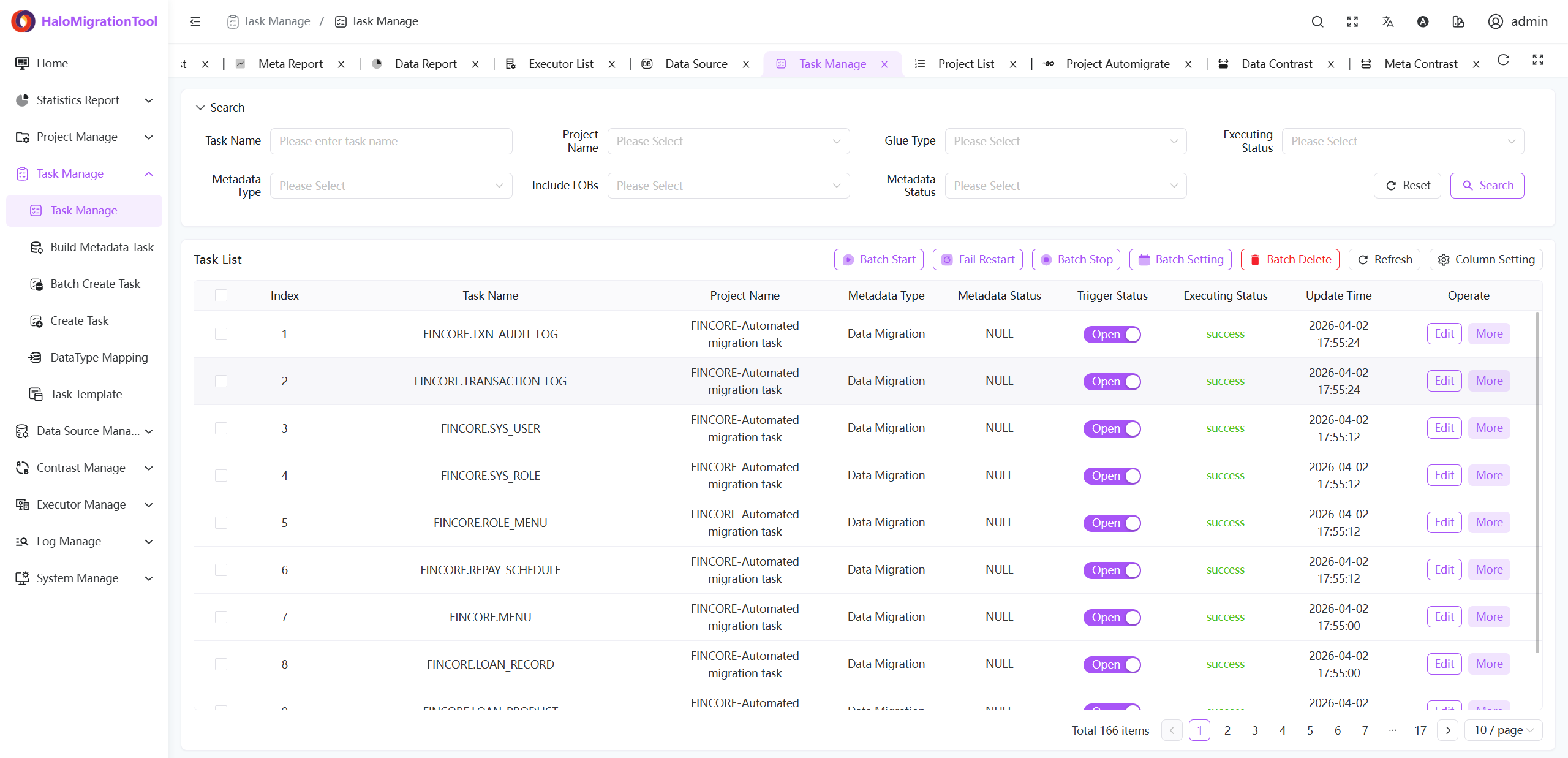
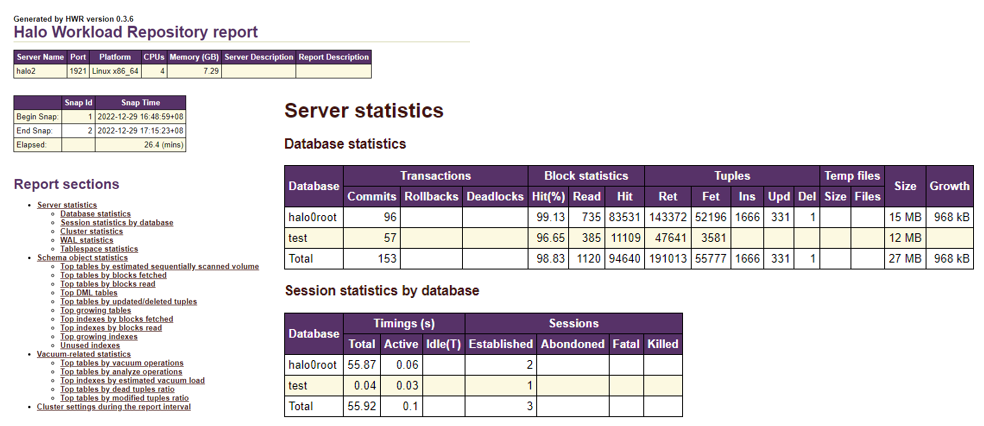
Observability Capabilities
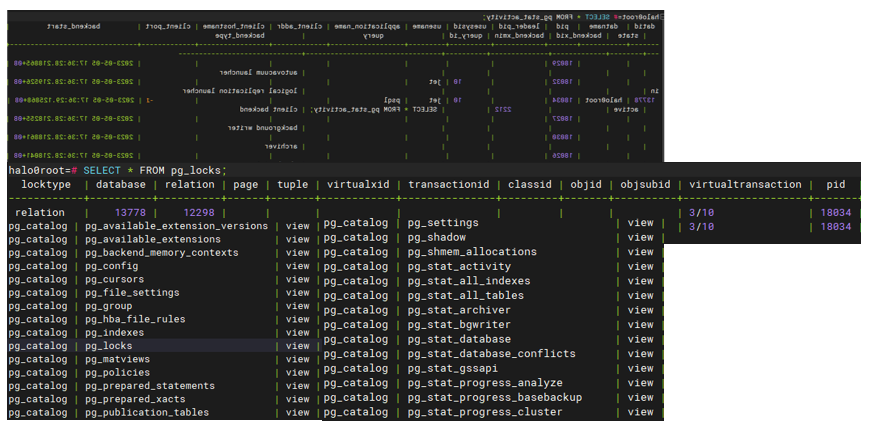
Rich performance views
Professional diagnostic tools (HWR)
Supports multi-dimensional observation
Multi-Mode Compatibility Technology (MMC) - E5 Engine
A proprietary technology developed by our company, achieving multi-platform compatibility through native kernel-level implementation. For systems built on databases such as Oracle, MySQL, PostgreSQL, it can significantly reduce application code modifications. Based on current migration practices, it can reduce code modifications by at least 98% or even achieve migration without code modification, thereby greatly reducing migration costs and time, while also significantly lowering migration risks and protecting existing investments.
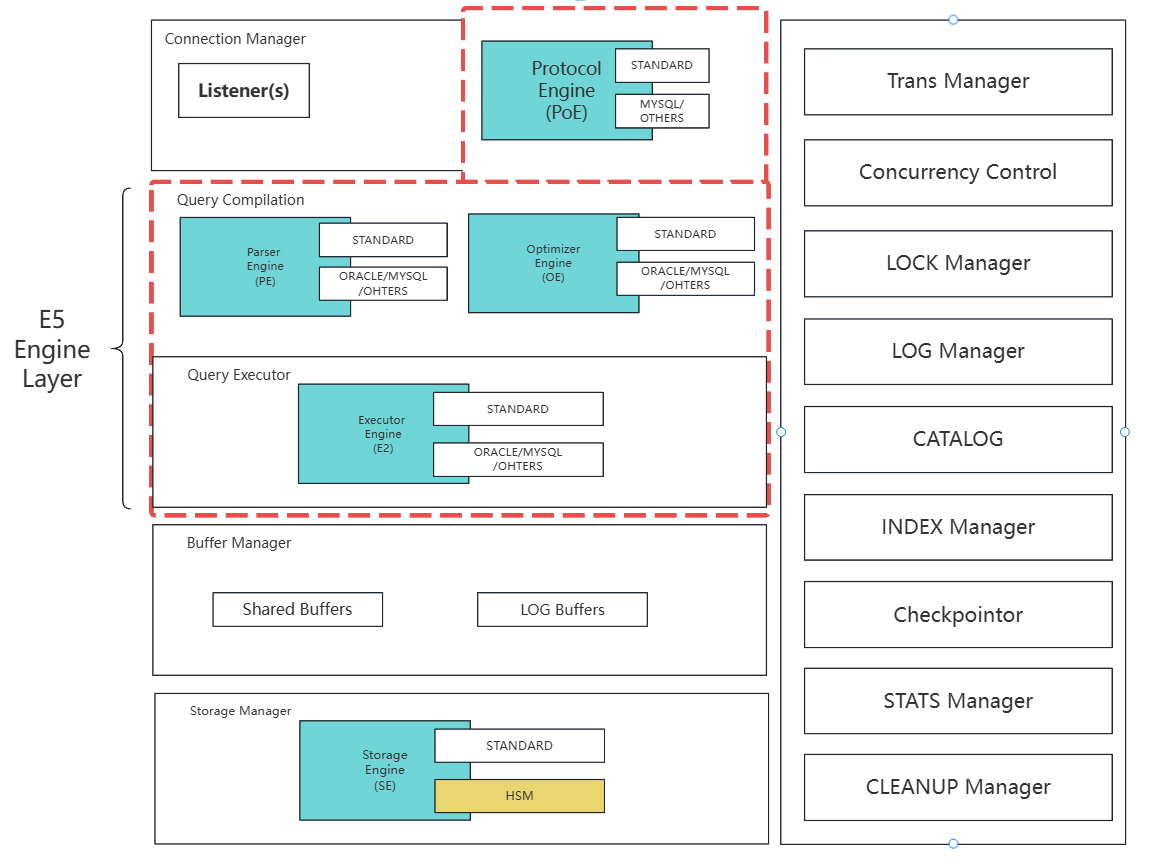
E5 Engine Includes Four Major Components:
Communication Protocol
Supports multiple database communication protocols
Compilation Engine
Responsible for syntax and semantic parsing of SQL statements
Optimization Engine
Responsible for generating execution plans
Execution Engine
Responsible for executing execution plans
Each multi-mode engine provides complete implementation from compilation to optimization to execution. Therefore, the multi-mode engine is not just shallow compatibility at the syntax level, but deep, comprehensive compatibility across database protocol, syntax parsing, optimizer, and executor, enabling smooth migration for systems built on databases such as Oracle, MySQL, and PostgreSQL.
E5 Engine Technical Advantages:
Configurable
Simply configure to switch between different database modes
No Performance Loss
Native kernel implementation, no additional performance overhead
Full Functionality Support
Supports all kernel functions
E5 Engine: Protocol-Level Support
Taking Halo[MySQL] as an example, Halo implements support for the MySQL communication protocol and commonly used MySQL syntax, enabling applications developed based on MySQL to communicate with Halo with almost no code rewriting.
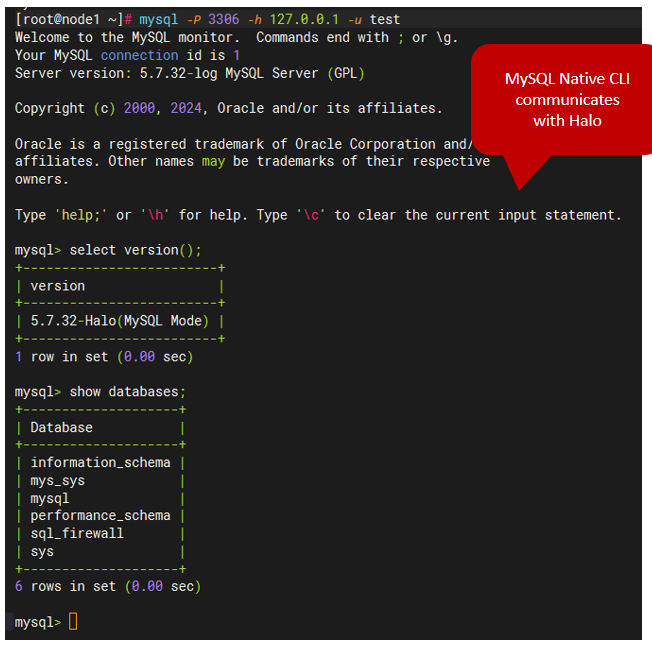
MySQL Native CLI communicates with Halo
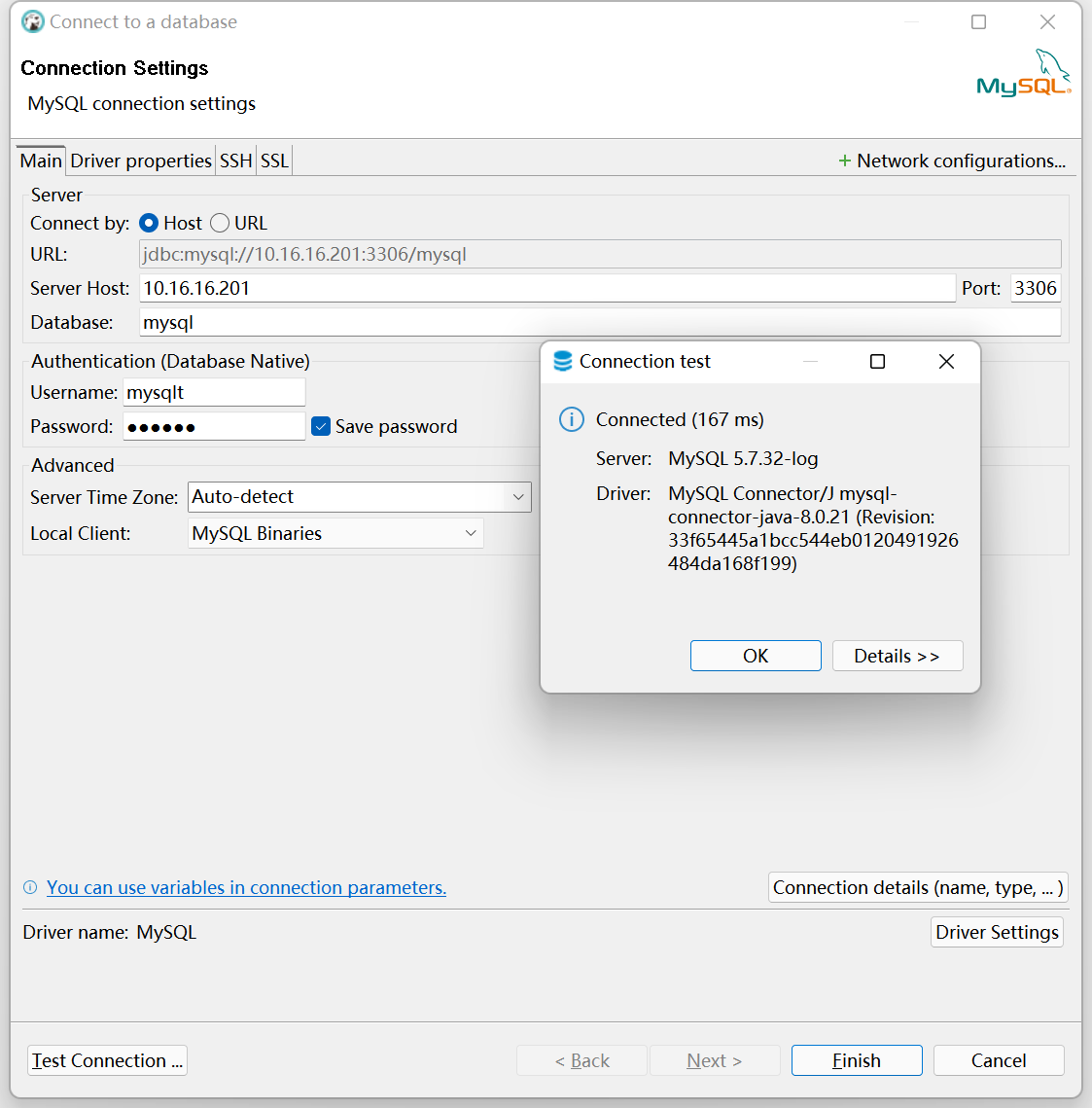
MySQL GUI Tool (dbeaver) communicates with Halo
Application Code 'Zero' Modification Technology - Driver-Level Compatibility (Oracle)
Driver Interface Compatibility Technology
Although multi-mode compatibility technology can achieve deep compatibility with SQL, PL/SQL syntax, and database objects of different databases, it still cannot avoid modifying application code during application migration. Therefore, we have innovatively developed compatibility technology for JDBC and .Net driver interfaces. For closed commercial database software like Oracle, we have achieved compatibility with its proprietary driver interface classes based on its public documentation, truly realizing application code 'zero' modification.
Driver-Level Compatibility Technology
Oracle driver interface compatibility technology
Zero Application Code Modification
Truly achieve 'zero' application code modification
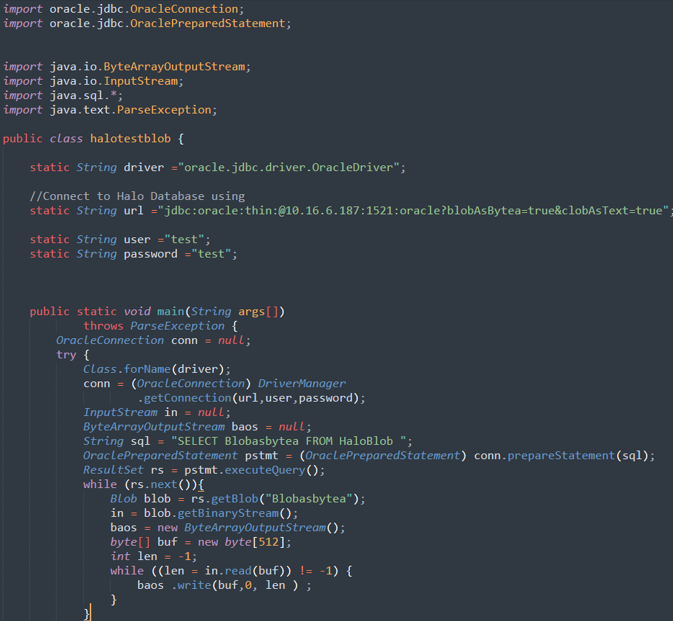
Driver-Level Compatibility Technology
Compatibility List (Partial)
Supports Oracle, MySQL, and PostgreSQL, the three mainstream databases
Oracle Compatibility Capability List (Partial)
- Supports join operator (+)
- Supports DUAL pseudo table
- Supports SYSDATE/SYSTIMESTAMP
- Supports UPDATE with alias
- Supports anonymous subqueries
- Supports ROWNUM
- Supports ROWID
- Supports MINUS operation
- Supports DECODE function (unlimited parameters)
- Supports DBLINK (@ syntax)
- Supports Oracle format numeric output
- Supports VARCHAR2/NUMBER/CLOB/BLOB data types
- Supports START WITH/CONNECT BY syntax
- Supports special IN syntax
- Supports Oracle format date types and operations
- Supports LISTAGG/WM_CONCAT functions
- Supports DISTINCT operation in window functions
- Supports interchangeable HAVING/GROUP BY clause order
- Supports equivalent conversion of NULL and empty string
- Supports sequence value retrieval with Oracle syntax
- Supports creation of PROCEDURE/FUNCTION/PACKAGE with Oracle syntax
- Supports using column aliases in ORDER BY clause
- Supports TABLE function
- Supports MERGE INTO syntax
- Supports WITHIN GROUP syntax
- Supports Q' escape syntax
- Supports NLS_DATE_FORMAT parameter
- Supports common Oracle views
- Supports commonly used Oracle packages/functions
- Supports partitioned queries
- Supports functions using OUT parameters
- Supports Oracle JDBC driver classes
MySQL Compatibility Capability List (Partial)
- Supports MySQL protocol
- Supports REPLACE INTO
- Supports INSERT IGNORE
- Supports UPDATE .. ON DUPLICATE KEY
- Supports INSERT .. VALUE
- Supports MySQL quote usage supports symbol (`)
- Supports using @ variables
- Supports LIMIT operation
- Supports UPDATE .. [ORDER BY] .. LIMIT
- Supports DELETE .. [ORDER BY] .. LIMIT
- Supports ORDER BY sorting by specified column order
- Supports MySQL basic data types
- Supports SET type
- Supports enum types
PostgreSQL Compatibility Capability List (Partial)
- Supports PostgreSQL protocol
- Supports system columns such as ctid/xmax/cmax
- Supports table inheritance
- Supports rule system (RULE)
- Supports CTE
- Supports Array/Range/Domain data types
- Supports pseudo columns such as any/anyelement/anyarray
- Supports pl/pgsql
- Supports libpq driver interface
- Supports GiST/SP-GiST/GIN/BRIN indexes
- Supports ECPG
- Supports extension subsystem (EXTENSION)
DLB Technology
Using Storage-Compute Separation Architecture
Core Features
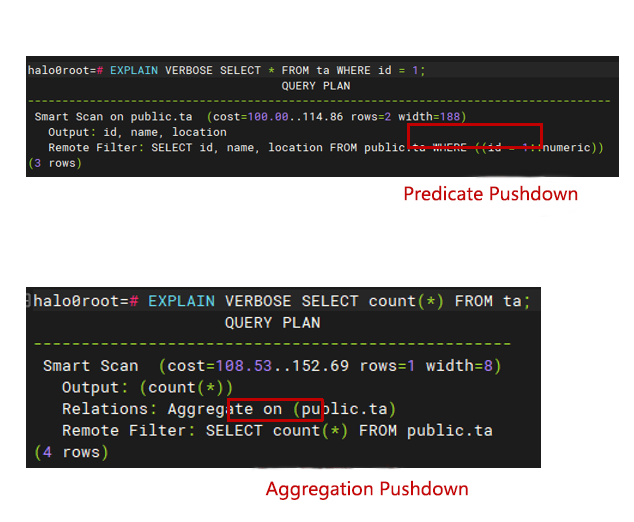
Intelligent Condition Pushdown
Work nodes and data nodes use private communication protocol to avoid multiple parsing
Automatic Function Load Balancing
DLB itself can achieve load balancing and high availability through LVS, f5, etc.
No Distributed Lock Overhead
Uses storage-compute separation architecture to avoid distributed lock issues
Application-Transparent Load Balancing
Transparent to applications, no code modification required
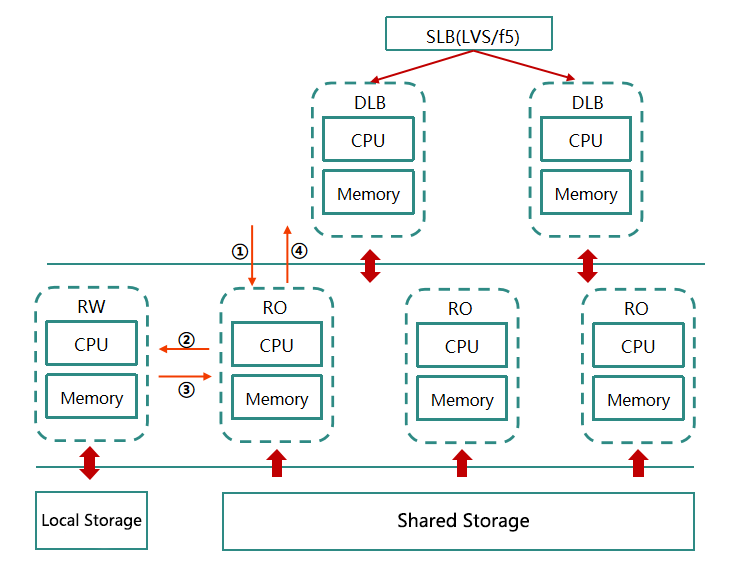
Transparent Redirection
When a RO node detects a write operation, it redirects the operation to the RW node
① Application initiates an UPDATE operation
② RO node detects this as a write operation and redirects it to the RW node
③ RW node executes the write operation and returns the result to the RO node
④ RO node returns the result to the application
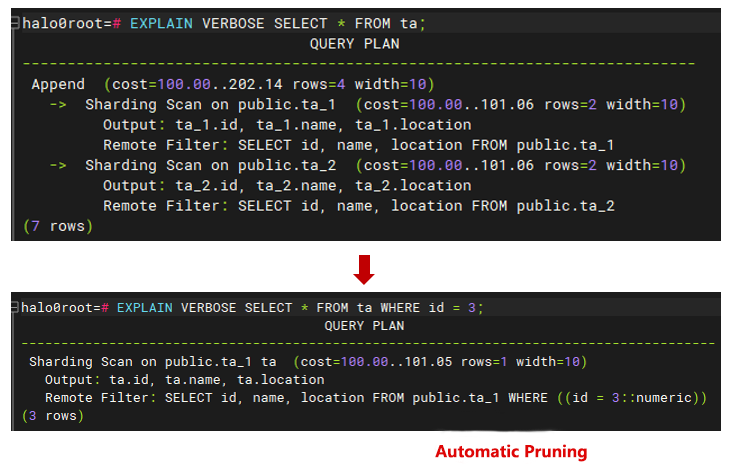
HDS – Halo Data Sharding
Uses storage-compute separation architecture
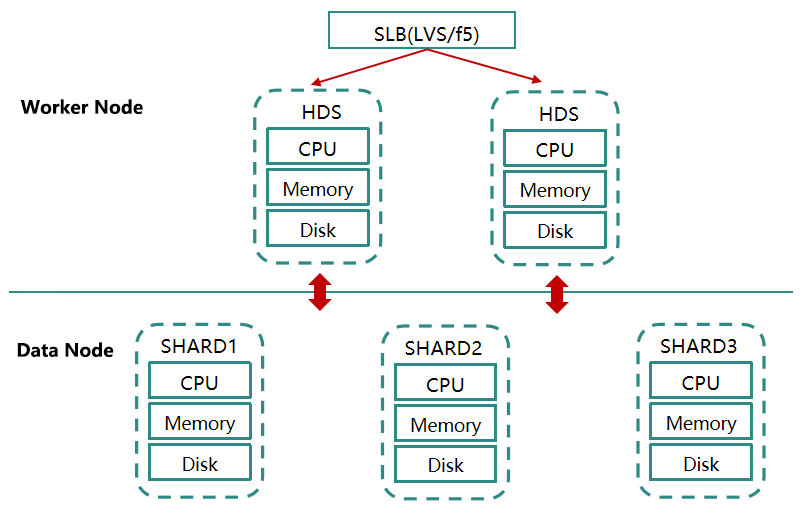
Flexible sharding strategies (hash/range/list)
Intelligent condition pushdown
Automatic shard pruning
Parallel data writing
Soft Parsing Technology
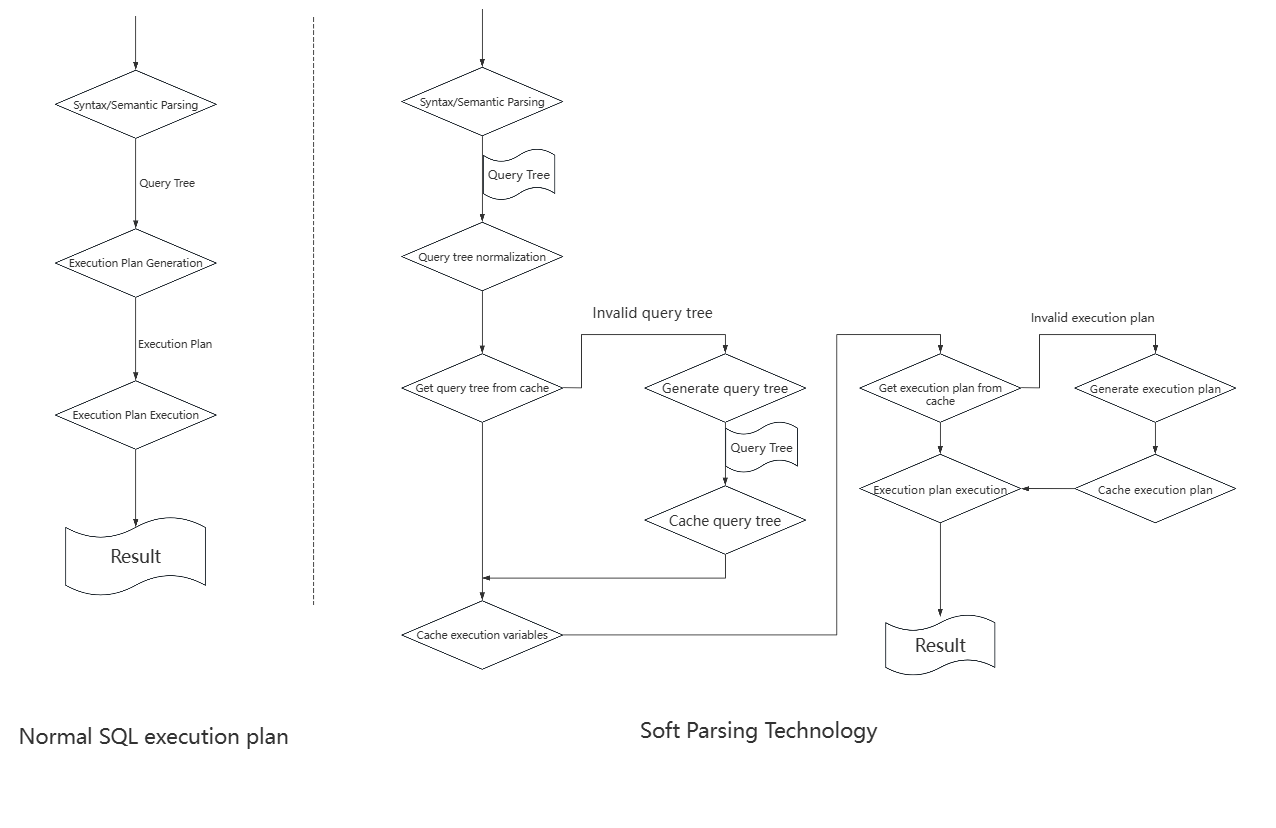
Through soft parsing technology, reduce the number of hard parses, save CPU resources, and improve SQL execution performance
Reduces number of hard parses
Saves CPU resources
Improves SQL execution performance
MGR (Multi-Group Replication) Technology
Can divide slave databases into multiple groups, each group containing one or more slaves. Different groups can set different synchronization levels, improving overall cluster performance and ensuring RPO=0
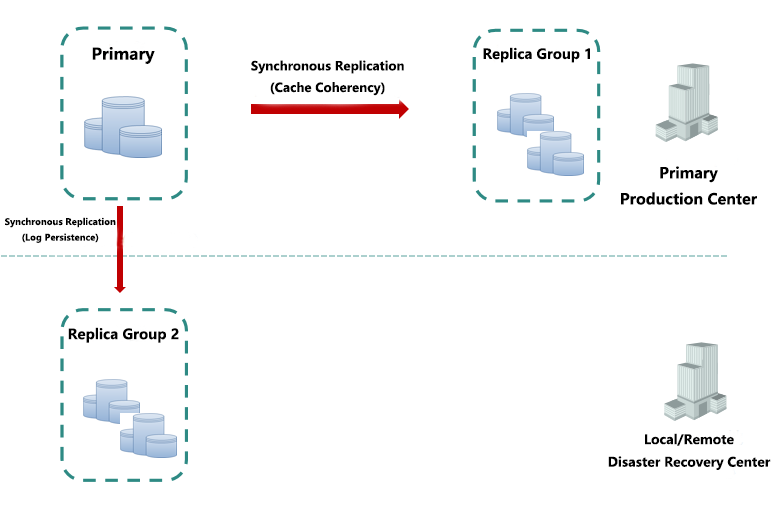
Core Features
- Can divide slave databases into multiple groups, each group containing one or more slaves
- Different groups can set different synchronization levels
- Improves overall cluster performance
- Ensures RPO=0
Problems with general master-slave synchronization
Taking 1 master 2 slave synchronous replication (cache consistency) as an example
- Master database transactions cannot commit normally, affecting normal business operations
- May lead to master-slave data inconsistency
Halo Stream Replication Self-Protection Technology (Sentinel Mode)
- Automatic fault isolation: When a synchronous standby is abnormal, automatically isolate the faulty standby, ensuring the cluster can provide services normally
- No-delay fault isolation: Real-time monitoring of standby status, immediate intervention when standby fails
- Low resource consumption: Only one process needed to support all standbys. After sentinel mode is enabled, it consumes minimal system resources
- Flexible deployment: Supports complex architectures such as group replication and Clustermgr, adapting to multi-node high-availability deployment
- Convenient operations: Only needs parameter file configuration, easy to maintain functionality
- Solves the problem of data inconsistency after standby server crashes
Ensure Zero Data Loss, Guarantee Business Continuity
Global Distributed Database (GDD)
Cross-region distribution, data consistency guarantee, automatic failover
Cross-region Distribution
GDD enables any node to read and write, allowing businesses to access the nearest node
Data Consistency Guarantee
Uses RAFT protocol to ensure strong data consistency
Automatic Failover
Node failure triggers automatic business and data failover without manual intervention
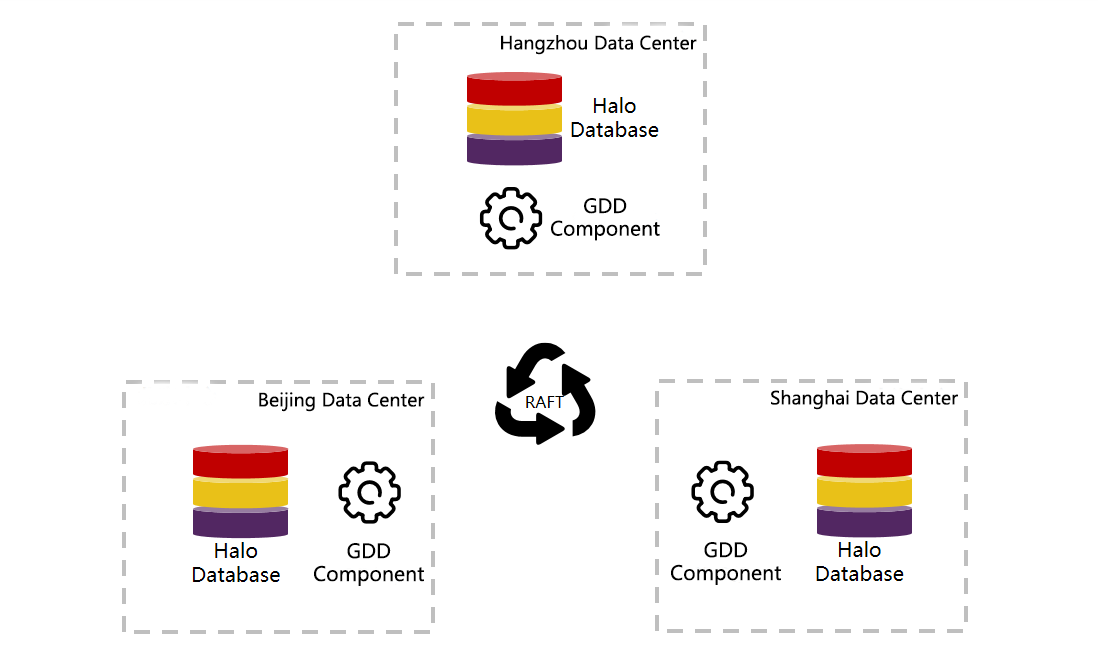
Value 1: Business Continuity Assurance - Automatic Failover RTO at Minute Level
When any data center fails, business traffic is automatically and intelligently routed to surviving data centers, achieving minute-level recovery and ensuring uninterrupted business
- Multi-master Raft and Failover: The cluster automatically takes over the 'identity' and traffic of failed nodes
- Application-transparent Redirection: Business applications connect to new data service endpoints without awareness
Value 2: True Multi-site Active-Active - Simultaneous Read/Write Across Locations, Zero Idle Resources
Breaks the traditional master-standby model, all remote nodes can carry production read/write traffic, transforming disaster recovery resources from 'cost centers' to 'business capability centers'
- Multi-master Architecture: No central bottleneck, each node is an equal 'master node'
- Global Data Capture and Synchronization: Ensures writes from any location are synchronized to other nodes in real-time and consistently
Deep Integration of DB and AI
DataOS - Kernel-level AI support, greatly shortening the distance between models and data
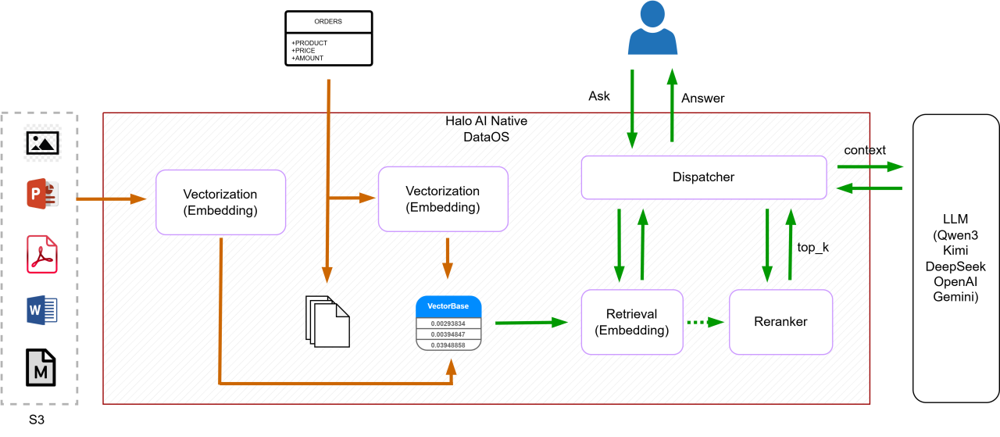
Greatly shortens the distance between models and data
- Advanced vector processing technology
- Advanced model training and management
- Advanced multi-model fusion and hybrid model processing
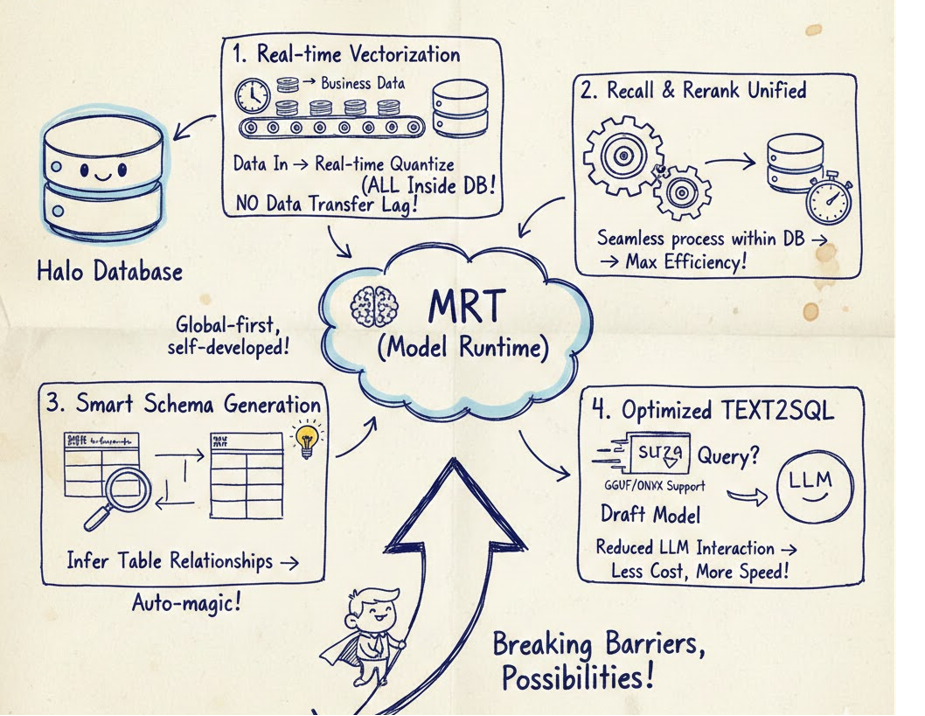
Halo MRT (Model Runtime)
Real-time Vectorization
Real-time vectorization integrated in database
Integrated Recall and Re-ranking
Integrated recall and re-ranking, intelligent relation generation
Intelligent Relation Generation
Vector similarity search with multiple distance metrics
TEXT2SQL Optimization
Model version management, one-click rollback
Product Advantages
Over 50% higher comprehensive performance compared to international products
Experience Halo Database Now
Fast migration, seamless compatibility, superior performance - start your database localization journey